

Fictional Name Generators: Free Character and Place Names for Any Story
Quick Answer: A fictional name generator creates names for characters, places and creatures that exist only in a story, game or world. Choose a group below, open the tool that fits your genre, and get instant name ideas for novels, campaigns and games. Elf name generators are live now, with place, sci-fi and character tools on the way.
A story can survive a weak plot more easily than a weak name. A name is the first thing a reader meets, and it quietly sets the mood, the world and the character’s role before anything else happens. This page is the home of our fiction tools, and it also explains how characters and their names work, so you can choose with your eyes open.
Unlike the username and handle tools on the rest of the site, these names are made for novels, campaigns, games and worlds you invent yourself. Use the search bar to jump straight to a generator, or open one of the groups below. Written and maintained by Waseem Aijaz, WordPress Developer and SEO Specialist, who builds and tests every generator on this site. Last updated October 2026, when the Christmas elf and Elf on the Shelf tools were added and place, sci-fi and romance generators went into planning.
Free Fiction and Character Name Generators

✓ All tools loaded
Elf Name Generators
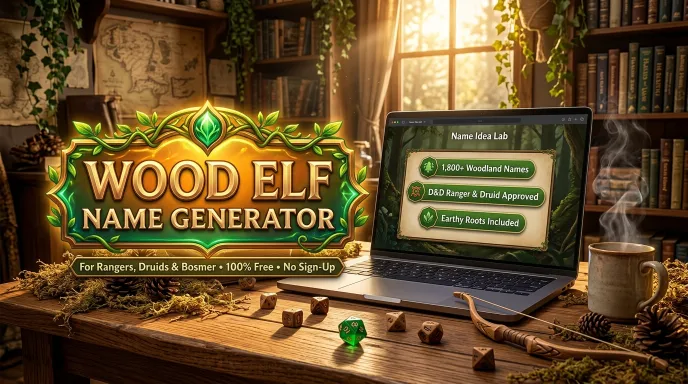
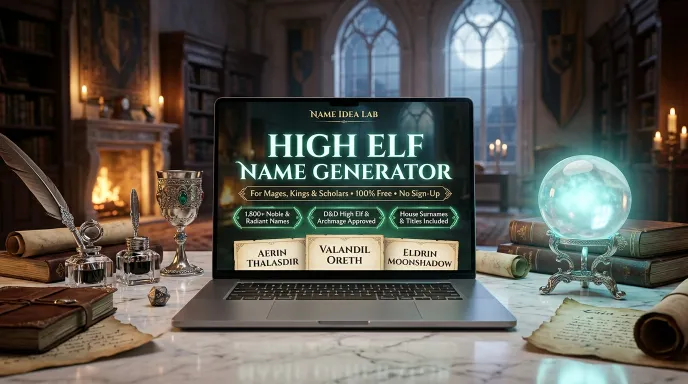
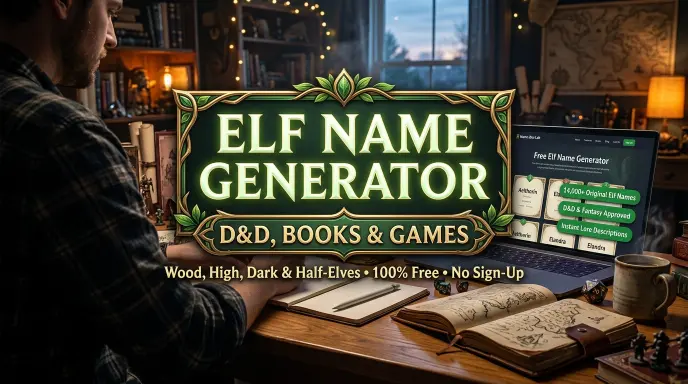
Elves are the first collection to launch, and each type has its own tool. Start with the main generator, or open the type that fits your character.
Place four widgets here: Elf Name Generator, Wood Elf, High Elf and Dark Elf. Use Load More for the rest.
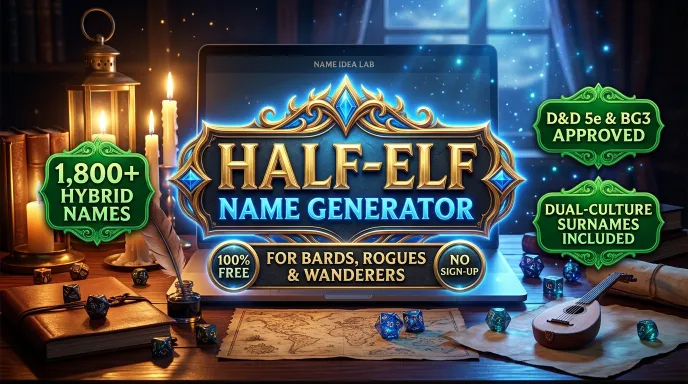
The rest of the collection covers half-elf names, blood elf names, D&D elf names, Christmas elf names and Elf on the Shelf names. A general Fantasy Name Generator is coming soon for characters, kingdoms and tabletop worlds.
Fictional Place Name Generators
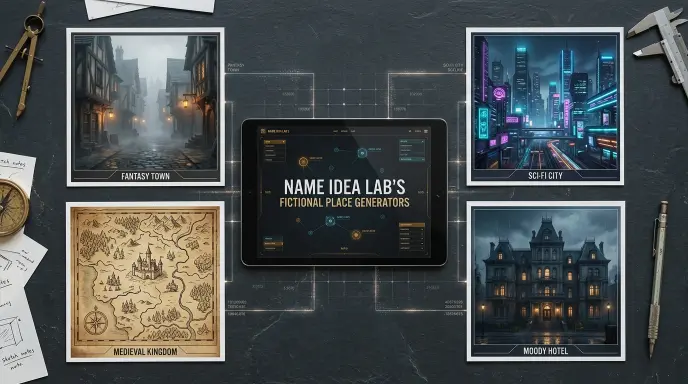
Stories need places as much as people. These tools name the towns, cities, countries and hotels your characters live in and visit.
Coming soon cards,
- Fictional Town Name Generator
- Fictional City Name Generator
- Fictional Country Name Generator
- Fictional Hotel Name Generator
Genre Name Generators
Each genre has its own sound, so each gets its own generator.
Coming soon cards,
- Sci-Fi Name Generator
- Horror Name Generator
- Anime Name Generator
- Fantasy Name Generator
Name Generators by Character Role
Some writers start from who a character is, and not from where the story is set. These tools are organised by role and personality.
Coming soon cards,
- Hero Name Generator
- Romance Name Generator
- Personality Name Generator
- Novel Character Name Generator
New tools are added on a rolling basis, and the next ones are chosen from real requests. If there is a generator you want built, tell us on the Contact Us page.
Choose Your Genre
A good name belongs to its world. Use this table to decide which generator to open, or which one to wait for.
Genre or use | What the names should feel like | Generator |
|---|---|---|
Fantasy novels and worlds | Flowing, ancient, a little mythic | Elf generators (live), Fantasy (coming soon) |
Tabletop campaigns | Easy to say across a table | D&D Elf |
Horror fiction and games | Cold, short, a little wrong | Horror (coming soon) |
Anime and manga-style stories | Japanese-inspired, rhythmic | Anime (coming soon) |
Protagonists and heroes | Strong, memorable, easy to chant | Hero (coming soon) |
Festive and family stories | Cheerful and playful |
Not sure where your story fits? Start with the closest match, generate a batch and see what feels right. You can always try another tool.
How to Use the Fiction Name Generators
Before you generate
Know your genre
A fantasy name and a horror name pull in opposite directions. Decide the mood first and the right tool becomes obvious.
Know the role
A hero, a villain and a shopkeeper all need different names. Write the role in a few words before you start. The table of character roles further down can help.
While you generate
- Find your tool. Use the search bar at the top, or open one of the groups above.
- Use the filters the tool offers, such as gender, style, starting letter and length.
- Generate a full batch instead of settling on the first result.
- Save a few favorites with the heart so you can compare them side by side.
- Read the short lore description under each name. It is written as a spark for your own backstory.
After you generate
Copy or download your shortlist, then try each name inside a real sentence from your story. The names that survive that test are the keepers.
What Is a Fictional Character? Meaning and Examples
A fictional character is a person, animal or being invented for a story. They live in novels, short stories, plays, films, comics, games and anime, and they exist only inside the world of that work. People in memoirs, history books and news reports are not fictional characters, because they are real.
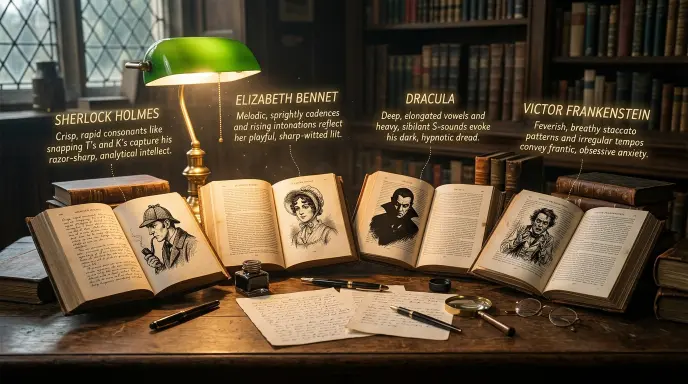
The best fictional characters feel real even though they are not. They have wants, flaws and a past, and they show something true about people. Here are a few well-known examples from works that are now in the public domain.
Character | Created by | What the character shows |
|---|---|---|
Sherlock Holmes | Arthur Conan Doyle | Sharp reasoning and observation |
Elizabeth Bennet | Jane Austen | Wit, pride and learning to change your mind |
Dracula | Bram Stoker | Fear of the stranger and the hidden |
Victor Frankenstein | Mary Shelley | Ambition without responsibility |
Odysseus | Homer | Cunning and the long road home |
Cinderella | Traditional fairy tale | Hope in a hard life |
Notice how much each name carries. You can hear a whole personality in Sherlock Holmes before the first page.
Types of Characters in Fiction
Writers sort characters by the job they do in the story. Different guides count four types, eight or ten, but the core roles are the same. Here are eight common ones, and what each means for naming.
Role | What the character does | A naming angle |
|---|---|---|
Protagonist | Drives the story and wants something | Memorable and easy to say, since readers will see it thousands of times |
Antagonist | Stands in the way of the protagonist | Often sounds different from the hero, so the two clash on the page |
Deuteragonist | A close second lead beside the protagonist | A name that pairs well with the hero’s without copying it |
Foil | Contrasts with another character to highlight a trait | An opposite sound, such as hard against soft |
Confidant | Listens and gives the protagonist someone to talk to | Warm and approachable |
Love interest | Draws the protagonist’s heart | Different from the hero’s initial and rhythm, so they never blur |
Mentor | Guides and teaches | Weighty, often a little older in sound |
Minor character | Appears briefly to serve a scene | Short and forgettable on purpose, so the page stays clear |
Lists of ten types usually add the anti-hero, the narrator and the stock character.
Round, flat, dynamic and static characters
Round characters have depth and surprise us, while flat ones stay simple and predictable. Dynamic characters change over the story, and static ones stay the same. A hero is usually round and dynamic, and a shopkeeper is often flat and static. The more a character changes, the more a good name needs to carry both the starting point and the person they become.
What a Name Does for a Character
A name does more work than most writers expect. It does four things at once.
It sets a sound
Hard sounds such as k, t and z feel sharp and fast, while soft sounds such as l, m and n feel calm and flowing. Writers use this without noticing, which is why villains so often get crisp names and healers get gentle ones.
It can carry a meaning
Some authors choose names that hint at personality. Charles Dickens named a miser in A Christmas Carol Scrooge, a name that sounds tight and sour, and readers still use it that way today. A name does not need to be that obvious, but a small hint rewards a careful reader.
It places the character in a culture and time
A name can suggest where someone comes from and when. If the people of one land share a rhythm or an ending, the world feels designed and consistent.
It keeps the cast clear
Two characters whose names begin with the same letter or end the same way are easy to confuse. Varying first letters, lengths and sounds across a cast is one of the simplest ways to make a story easier to read.
Fiction Genres and How Their Names Differ
The genre you write in changes what a good name sounds like. Here are common genres, and what their names often feel like.
Genre | A typical name feel | Our tools |
|---|---|---|
Fantasy | Flowing, ancient, a little mythic | Elf generators (live), Fantasy (coming soon) |
Science fiction | Clipped, technical or futuristic | Sci-Fi (coming soon) |
Horror | Cold, short, a little wrong | Horror (coming soon) |
Romance | Warm, memorable, easy to say | Romance (coming soon) |
Anime-style stories | Japanese-inspired and rhythmic | Anime (coming soon) |
Festive and family stories | Cheerful and playful |
Mystery, historical fiction and adventure follow the same rule: match the sound to the world.
How We Organise the Generators
The tools are grouped by what you are naming: an elf, a place or a role. Every generator is free to start, needs no sign-up, and keeps your saved favorites in your own browser. Names come with a short lore-style description to spark ideas, and the filters let you narrow by type, gender, style and length where the tool offers them.
Disclaimer:
The names generated by these tools are creative suggestions for fiction and entertainment only, and are not official names from any book, film or game. Availability, uniqueness and trademark status are not guaranteed, so search for a name yourself before you publish or sell anything under it. See our full Disclaimer for details.
Frequently Asked Questions (FAQs)
What does fiction character mean?
A fiction character is a person, animal or being invented for a story. They appear in novels, films, plays, comics and games, and they exist only inside the world of that work.
Can you give me an example of a fictional character?
Sherlock Holmes is a classic example. Arthur Conan Doyle created him as a detective known for sharp reasoning, and he appears only in stories. Elizabeth Bennet from Jane Austen’s Pride and Prejudice is another.
What are 5 examples of fiction?
Five common examples are fantasy, science fiction, mystery, romance and horror. Historical fiction and adventure are also widely read. Each has its own style of character names.
What are the 8 types of characters in fiction?
A common list is protagonist, antagonist, deuteragonist, foil, confidant, love interest, mentor and minor character. Some guides count four or ten types, but they describe the same roles.
Is anime a fictional character?
No. Anime is a style of animation, and the people in anime stories are the fictional characters. Characters in an anime are invented for the story, just like characters in a novel.
What is the difference between a fictional name generator and a character name generator?
A fictional name generator covers anything invented, such as people, creatures and places. A character name generator is narrower and focuses on people and beings. Our tools cover both, grouped by purpose.
Which fiction tools are live right now?
The elf name generators are live: elf, wood, high, dark, half, blood, D&D, Christmas and Elf on the Shelf. Place, genre and role generators are coming soon.
Do the names have real meanings?
No. Fiction names here are invented, and each comes with a short lore-style description for inspiration. For real names with documented meanings, use the Culture & Religion generators.
Related Guides
For deeper dives, these guides go beyond the tools.
- Female Elf Names: more than 80 ideas sorted by elf type.
- Skyrim Elf Names: name ideas for Bosmer, Dunmer and Altmer characters.
- Funny Elf on the Shelf Names: puns and wordplay for boy, girl and neutral elves.
Need a Name for Something Real?
The names on this page are for fiction. If you need a real name, a handle or a brand, these categories are built for that.
- Culture & Religion Name Generators: real names with documented meanings.
- Gaming Name Generator: usernames and clan names for your favorite games.
- Social Media Name Generator: handles for Instagram, TikTok, YouTube and more.
- Business Naming & Branding Tools: names and logo ideas for a business.