
Quick Answer: American boy names span a genuinely wide mix of traditions — English, Irish, German, African-American, Native American, and Hispanic — rather than one single style. This guide breaks down real examples across these origins with meanings, plus a free tool to generate hundreds more.
The same narrow list shows up on most “American boy names” pages — Liam, Noah, Mason — English-rooted names presented as if they’re the whole picture. They’re not. American boy naming culture pulls from English, Irish, German, African, Native American, and Hispanic traditions all at once, and understanding where a name actually comes from makes the search far more intentional.
English and European-Rooted Names
The tradition most people picture first, and still widely used across generations.
| Name | Meaning | Origin |
|---|---|---|
| William | Resolute protector | Germanic |
| Henry | Home-ruler | Germanic |
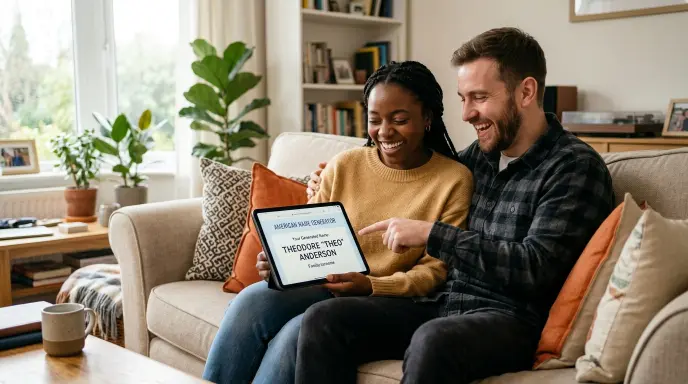
| Theodore | Gift of God | Greek |
| Oliver | Olive tree | English/Old French |
| Alexander | Defender of the people | Greek |
| Charles | Free man | Germanic |
These names read as timeless and familiar across most of the US, working well for families who want a name that feels broadly recognizable.
African-American Naming Traditions
African-American naming culture blends African-language roots, biblical names, and distinctly modern American coinages that became especially prominent from the 1960s onward as an expression of cultural identity.
- Malik — meaning “king,” Arabic-rooted and widely used
- Jabari — meaning “brave,” Swahili-rooted
- Elijah — a biblical name with deep roots across many American naming traditions, especially prominent in African-American naming culture
- Amir — meaning “prince, commander,” Arabic-rooted
This tradition also includes inventive modern names and spellings that emerged as a deliberate departure from older Anglo naming conventions, forming a distinctly American naming pattern in its own right.
Native American Naming Traditions
Native American names often carry direct, meaningful translations tied to nature, character, or spiritual concepts, and vary significantly between tribes and nations.
- Dakota — referring to an allied group of tribes, now also used broadly as a given name
- Kai — meaning “willow tree” in some Native traditions, though also used across other cultures with different meanings
- Nokosi — meaning “bear,” Muscogee/Creek origin
- Tokala — meaning “fox,” Lakota origin
Because meanings and traditions vary meaningfully by tribe, it’s worth treating these as distinct traditions rather than one blended category when accuracy matters to you.
Hispanic and Latin American Names
Hispanic naming traditions are deeply woven into American naming culture, particularly in regions with large Latino populations.
- Mateo — meaning “gift of God,” Spanish form of Matthew
- Santiago — meaning “Saint James,” widely used across Spanish-speaking traditions
- Diego — meaning “supplanter,” Spanish
- Emiliano — meaning “rival, eager,” Spanish/Italian rooted
These names are now among the most widely used boy names in the US, reflecting how central Hispanic culture is to modern American naming trends.
Modern and Blended American Names
Some of the most distinctly American boy names didn’t originate as given names at all — they started as surnames or occupational titles and became first names over time, a naming pattern especially common in the US.
- Mason — originally an occupational surname, now a top-ranked American boy name
- Hunter — an occupational surname turned given name
- Cooper — originally a barrel-maker’s surname
- Tyler — originally an occupational surname (“tile-layer”), now firmly a first name
This surname-to-first-name pattern is one of the clearest markers of distinctly American naming habits, and it’s exactly the kind of diversity reflected in our American Name Generator, which spans these traditions rather than defaulting to one.
How to Choose the Right One

- Decide if a specific heritage matters to you. Filtering with a tradition in mind — English, Native American, Hispanic — narrows the search quickly.
- Check the meaning, not just the sound. Names that sound similar can carry very different meanings depending on origin.
- Test the name with a surname if one applies. This matters especially for surname-turned-first-names, which can sound repetitive next to a similar-style family name.
- Don’t assume popular means generic. Currently trending American boy names span multiple traditions at once, not a single narrow style.
Where People Go Wrong
- Assuming all “American” boy names are English in origin. This misses a large part of what actually shapes the naming landscape.
- Treating Native American names as one uniform tradition. Meanings and naming customs vary significantly between tribes and nations.
- Choosing a name purely for current popularity. Trends shift fast; meaning and origin tend to hold up better over time.
- Overlooking the surname pairing. Surname-turned-first-names especially benefit from testing the full name before deciding.
Questions People Ask
What is the most American male name? There’s no single answer — American boy names span English, Irish, African-American, Native American, and Hispanic traditions, with names like Mason and Hunter reflecting a distinctly American surname-to-first-name pattern.
What is the best American name for a boy? This depends on what you’re prioritizing — a timeless English name like William, a modern surname-turned-first-name like Mason, or a name tied to a specific heritage like Malik or Mateo.
Are there Native American boy names with strong meanings? Yes, names like Tokala (fox) and Nokosi (bear) carry direct, meaningful translations, though it’s worth noting these vary significantly across different Native traditions.
What are unique American boy names? Names drawing from less commonly represented traditions, or newer surname-turned-first-names, tend to stand out more than the most common Anglo picks.
Why do so many American boy names come from surnames? Turning surnames and occupational titles into first names is a distinctly American naming habit, with names like Mason, Hunter, and Cooper following this pattern.
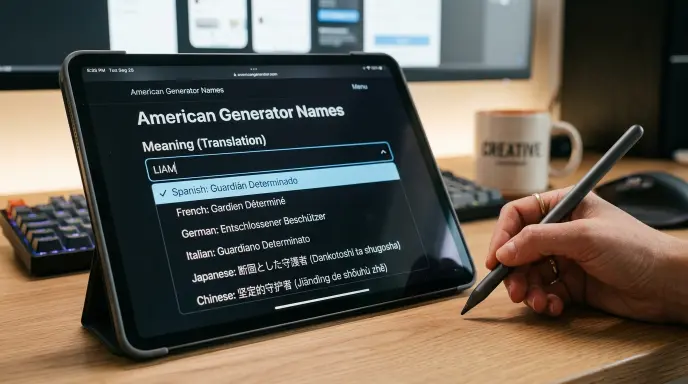
Can I filter results by cultural origin using the generator? The American Name Generator tags each name’s cultural origin in the results, letting you see exactly which tradition a name comes from as you browse.
Final Thoughts
American boy names were never just one tradition — they’re a genuine mix of English, Irish, African-American, Native American, Hispanic, and modern surname-turned-first-name habits. Knowing which tradition a name actually comes from makes the search far more intentional than pulling from one narrow list. For hundreds more options across all of these traditions, the American Name Generator covers the full spectrum in one place, and the wider Culture & Religion Name Generators hub covers naming traditions from other countries as well.