

Quick answer: A catchy brand name is short, easy to pronounce, and has a bit of rhythm or unexpectedness to it, qualities that make it stick in memory after just one or two exposures. Catchiness isn’t about being clever for its own sake, it’s about being genuinely easy to recall and repeat.
Everyone wants a catchy brand name. Almost nobody agrees on exactly what “catchy” means until they hear one. It’s less about cleverness and more about a specific set of traits that make a name easy to remember, say, and pass along to someone else. The good news is these traits are consistent enough that you can actually test for them, rather than just hoping a name “feels” catchy.
Here’s what those traits actually are, and how to find a name that has them.
What Makes a Brand Name Catchy
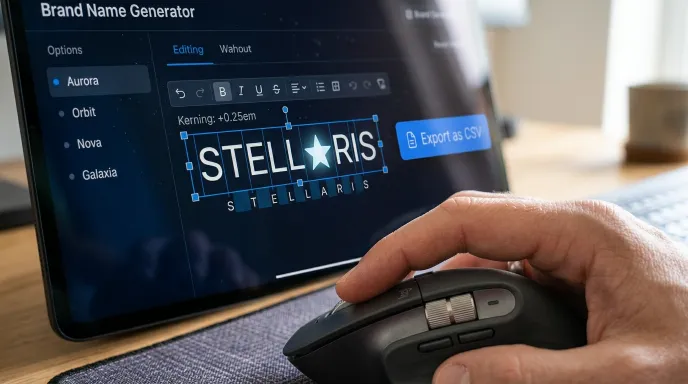
It’s short. Shorter names are easier to remember and repeat. One or two syllables tend to stick better than four or five.
It has rhythm. Repeated sounds, alliteration, or a natural flow when spoken make a name easier to recall than one that reads flatly.
It’s easy to spell the way it sounds. If someone has to guess how to spell it after hearing it, that friction works against you, especially for search visibility and word-of-mouth.
It feels a little unexpected. A name that surprises slightly, without being confusing, tends to stand out more than a completely predictable, literal one.
It’s distinct from what’s already out there. A catchy name that sounds too close to a competitor isn’t catchy, it’s just confusing.
Techniques for Finding a Catchier Brand Name
Start With a Real Word, Then Adjust It
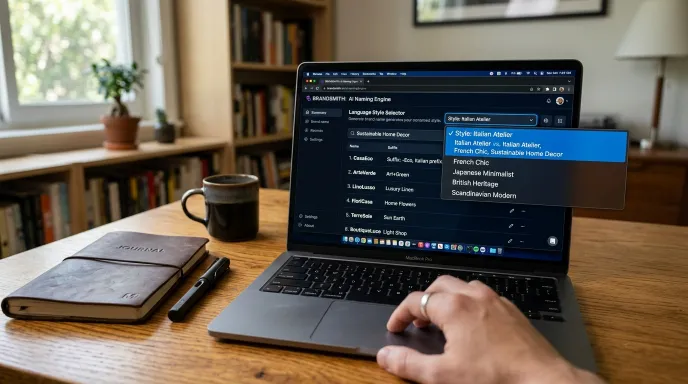
Rather than starting from nothing, pick a word connected to your brand’s core idea, then shorten it, blend it with another word, or tweak the spelling slightly. This keeps the name grounded in meaning while making it more distinctive.
Say Your Shortlist Out Loud
A name that looks catchy in writing can fall flat when spoken. Read your top candidates out loud, ideally to a few other people, and pay attention to which ones people repeat back easily without hesitating.
Compare a Short Form Against a Longer Version
Catchy names often work best in a tight, compact form. A dedicated brand name generator that gives you both a short, brandable version and a fuller company-style version for the same core idea makes this comparison easy, generate a batch and see which format actually feels catchier for your specific concept.
Test a Few Different Core Keywords
Small changes in your starting word can lead to very different results. If your first batch doesn’t feel catchy enough, try a related but different keyword rather than endlessly tweaking the same one.
Catchy Doesn’t Mean Random
It’s tempting to think catchiness comes from being as unusual as possible, but names that are catchy purely because they’re strange often struggle to communicate anything about the brand. The strongest catchy names usually balance two things at once, memorability and at least a loose connection to what the brand represents.
A completely random, meaningless string of letters might be memorable in isolation, but it does none of the work a well-chosen catchy name can do, hinting at your brand’s personality, tone, or industry without spelling it out directly.
Quick Self-Test for a Catchy Brand Name
Before finalizing a name, run it through this checklist:
- Can you say it clearly in one breath, without stumbling?
- Would someone spell it correctly after hearing it just once?
- Does it stand out from your closest competitors’ names?
- Does it still sound good after you’ve repeated it ten times in a row?
- Does it hint at your brand’s personality, even loosely?
A name that passes most of these is a strong catchy-name candidate.
Catchy Brand Name Patterns to Try
| Pattern | How It Works | Example Direction |
|---|---|---|
| Shortened real word | Trim a relevant word down to something punchier | “Fabricate” → “Fabri” |
| Blended words | Combine two relevant words into one | “Fresh” + “Market” → “Freshmar” |
| Invented spelling | Slightly alter a real word’s spelling | “Cloud” → “Klowd” |
| Sound-based | Choose words for how they sound together, not just meaning | Alliterative or rhyming pairs |
| Short + suffix | Pair a short root with a modern suffix | Core word + “.io,” “-ify,” “-ly” |
Where People Go Wrong “Catchy”
- Prioritizing cleverness over clarity. A pun or wordplay that only makes sense once explained usually isn’t catchy, it’s just confusing on first impression.
- Making it too similar to a well-known brand. Borrowing too closely from an existing catchy name creates confusion rather than distinction.
- Ignoring pronunciation across your actual audience. A name that’s catchy in one accent or language can be awkward in another, worth testing broadly if your audience is diverse.
- Stopping at the first catchy-sounding option. Generate and compare several before locking one in, the second or third batch often produces something stronger than the first.
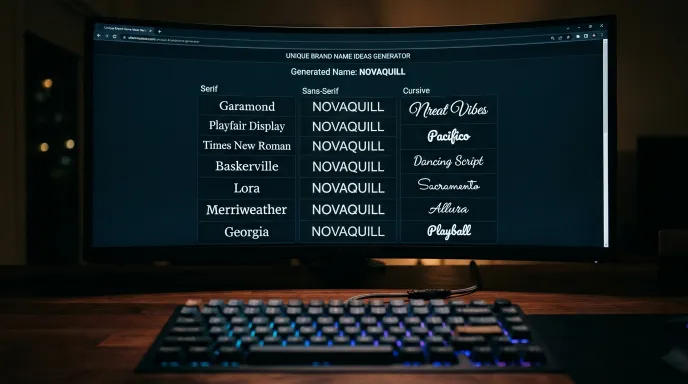
- Forgetting to check how it looks written down, not just spoken. A name that sounds catchy out loud can look cluttered or hard to parse visually on a logo, website header, or product label.
Catchiness Changes Depending on Your Audience
What reads as catchy can shift depending on who’s actually hearing it. A name that lands well with a younger, trend-driven audience might feel forced or try-hard to an older, more traditional customer base. Before finalizing a “catchy” name, it’s worth stepping back and asking whether the specific kind of catchy you’ve landed on, playful, edgy, elegant, punchy, actually matches the tone your target audience responds to. A catchy name that appeals to the wrong crowd doesn’t do much good, even if it technically passes every catchiness test on paper.
Questions People Ask
How do I create a catchy business or brand name? Focus on keeping it short, testing it out loud, and comparing a few different core keywords rather than settling on the first idea. Generating a wide batch of options and reacting to real examples tends to work better than trying to invent one from scratch.
Are invented words catchier than real words? Not automatically. Invented words can be catchy if they still sound natural, but a real word used in an unexpected way can be just as catchy, sometimes more so, since it’s easier to connect to a meaning.
Does a catchy name need to describe what my brand does? No. Plenty of catchy, successful brand names don’t literally describe the product. What matters more is that the name is memorable and fits the overall feel of the brand.
How short should a catchy brand name be? Shorter is generally better for catchiness, ideally one to three syllables, though this isn’t an absolute rule. The real test is whether people remember and can repeat it easily after hearing it once.
Can a longer name still be catchy? Yes, if it has strong rhythm or a memorable sound pattern. Catchiness is more about how easily a name rolls off the tongue than its exact length, though shorter names have an easier time achieving that by default.
Should I test my catchy name idea on other people before deciding? It’s a good idea. What sounds catchy to you after staring at a list for an hour can land differently with someone hearing it fresh for the first time. A quick, informal test with a few people often reveals which options are genuinely catchy versus just familiar to you.
Final Thoughts
A catchy brand name isn’t about being clever for its own sake, it’s about being easy to remember, easy to say, and just distinctive enough to stand out. Generate a batch of options with the free brand name generator, read them out loud, and pay attention to which ones actually stick after one pass.
Explore more free naming and branding tools in the Business Naming & Branding Tools collection, or head to the brand name generator to start comparing options for your own brand.
Written by Waseem Aijaz, WordPress Developer and SEO Specialist. Connect on LinkedIn.