
Quick Answer: Arabic boy names generally draw from four sources — Quranic names, names of the Prophet’s companions (Sahaba), Classical Arabic names tied to strength and virtue, and modern regional names. This guide breaks down real examples from each group, with meanings, plus a free tool to generate more.
Most “Arabic boy names” lists blend everything together with no explanation of where a name actually comes from or why it matters. This guide organizes Arabic boy names the way they genuinely break down — by religious significance, historical weight, and modern usage — so you can search with real intention.

Quranic and Prophetic Names
These names carry the deepest religious significance in Arabic naming.
| Name | Meaning | Significance |
|---|---|---|
| Muhammad | Praised, praiseworthy | The name of the final Prophet in Islam |
| Ibrahim | Father of many nations | A Quranic prophet, honored across Abrahamic traditions |
| Yusuf | God increases | A Quranic prophet known for patience and integrity |
| Musa | One who is drawn out | A central prophetic figure in the Quran |
| Isa | God saves | The Quranic name for Jesus |
Sahaba Names (Companions of the Prophet)

Names belonging to companions of the Prophet Muhammad carry significant historical and religious weight within Islamic tradition.
- Abu Bakr — the first caliph and a close companion of the Prophet
- Umar — meaning “long-lived, flourishing,” the second caliph
- Uthman — the third caliph, known for compiling the Quran
- Ali — meaning “elevated, exalted,” the fourth caliph and cousin of the Prophet
- Bilal — meaning “moisture, freshness,” known as the first muezzin in Islamic history
Classical Arabic Names Tied to Strength and Virtue
Classical Arabic naming for boys often draws on strength, leadership, and virtue-based meanings.
- Khalid — meaning “eternal”
- Rashid — meaning “rightly guided”
- Karim — meaning “generous, noble”
- Hakim — meaning “wise”
- Zaid — meaning “growth, abundance”
Modern and Regionally Popular Names
A newer wave of names has grown popular across the Arab world, blending classical roots with a contemporary sound.
- Rayyan — meaning “luxuriant, one of the gates of Paradise”
- Zayn — meaning “beauty, grace”
- Faisal — meaning “decisive”
- Adam — the Quranic name for the first human, widely used across regions
- Yousef — a regional spelling variant of Yusuf, common in the Gulf and Levant
These names see varying popularity across Saudi Arabia, the UAE, Egypt, Jordan, and other Arab countries.
Unique and Less Common Names
Names built from less frequently used roots tend to stand out as distinctive while still carrying authentic meaning.
- Ghaith — meaning “rain,” symbolizing relief and blessing
- Harith — meaning “cultivator, provider”
- Mansur — meaning “victorious, aided”
- Zafir — meaning “victorious, successful”
How to Choose the Right One
- Decide if religious or historical significance matters to you. A Sahaba-linked name and a purely modern regional name carry very different weight.
- Check the meaning across sources. Some names carry slightly different interpretations depending on regional or scholarly source.
- Consider regional pronunciation. The same name can be pronounced and spelled differently across the Gulf, Levant, and North Africa.
- Test the name with a family name if one applies. Arabic naming structures often include a father’s name, so previewing the full combination matters.
Mistakes Worth Avoiding
- Assuming every Arabic name is religious. Many widely used Arabic boy names come from Classical Arabic strength and virtue vocabulary with no direct Quranic or Sahaba tie.
- Overlooking regional spelling variation. The same name can be transliterated multiple ways (Yusuf/Yousef/Youssef) depending on region.
- Confusing a Sahaba name with a purely modern one. Names tied to specific historical companions carry documented significance that a modern coinage doesn’t share.
- Assuming Arabic names apply to only one country. These naming traditions are shared across the entire Arabic-speaking world.
Common Questions, Answered
What is the best Arabic boy name? There’s no single “best” — it depends on whether you prioritize Quranic significance, a Sahaba connection, or a modern regional sound. Names like Ibrahim, Ali, and Rayyan each serve different priorities well.
What are cool Arabic names for boys? Modern, shorter names like Zayn, Rayyan, and Faisal are often considered cool due to their contemporary sound alongside strong underlying meanings.
What is a unique Arabic name for a boy? Names like Ghaith (rain), Harith (cultivator), and Zafir (victorious) stand out as less commonly used while still carrying clear, authentic meanings.
Are there Arabic boy names from the Quran? Yes, names like Ibrahim, Yusuf, Musa, and Isa are Quranic prophetic names widely used across the Arab and broader Muslim world.
What is the difference between a Sahaba name and a regular Arabic name? A Sahaba name belongs specifically to a companion of the Prophet Muhammad, carrying documented historical and religious significance, while other Classical Arabic names may not have that specific connection.
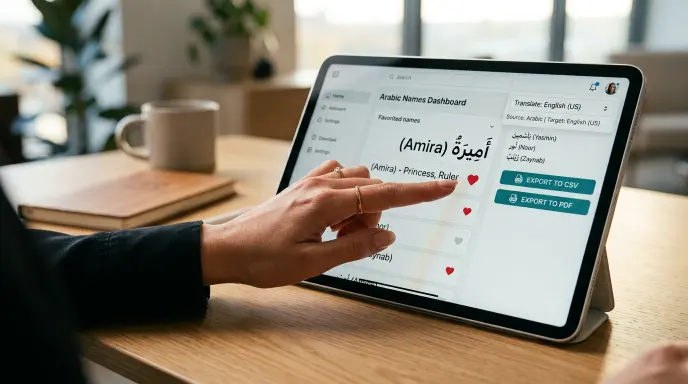
Can I generate more Arabic boy names filtered by category? Yes, the Arabic Name Generator lets you filter by category and gender, and attach a family name to preview the complete result.
The Bottom Line
The best Arabic boy name usually comes down to which tradition — Quranic, Sahaba, Classical, or modern regional — actually reflects what you’re looking for. Understanding where a name comes from and what it carries makes the choice far more intentional than picking by sound alone. For hundreds more options across every category covered here, the Arabic Name Generator covers the full range in one place, and the broader Culture & Religion Name Generators hub covers other countries and cultures as well.