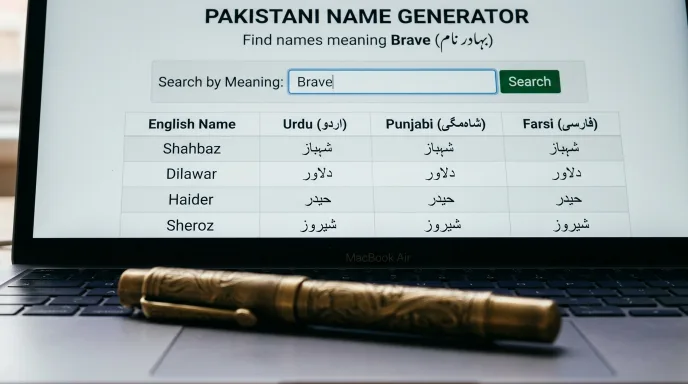

Quick Answer: Pakistani boy names generally fall into four groups — classical Quranic names, Persian/Urdu poetic names, region-specific names (Punjabi, Sindhi, Pashto, Balochi, Kashmiri), and modern hybrid names blending tradition with a shorter, contemporary sound. This guide breaks down real examples from each group, with meanings, plus a free tool to generate more.
Choosing a boy’s name is rarely just about how it sounds. For most families, it’s also about what the name means, where it comes from, and how it’ll be said for the next eighty years. This guide walks through Pakistani boy names by category, so you can pick based on what actually matters to you, not just the first name that sounds nice.
Classical and Quranic Pakistani Boy Names
These names carry the deepest historical roots, and many stay popular for generations because their meaning holds up regardless of trend.
| Name | Meaning | Notes |
|---|---|---|
| Ibrahim | Father of nations | One of the most widely used Quranic names |
| Musa | One who is drawn out | Carries strong historical weight |
| Yusuf | God increases | Associated with patience and beauty in tradition |
| Hamza | Steadfast, strong | A name tied to courage in early Islamic history |
| Zayd | Growth, abundance | Short, simple, still deeply rooted |
| Bilal | Moisture, freshness | Associated with one of the earliest companions in Islamic history |
Names in this group work well for families who want something timeless rather than trend-driven — they’ve been in continuous use for over a thousand years and aren’t going anywhere.
Urdu and Persian-Influenced Boy Names
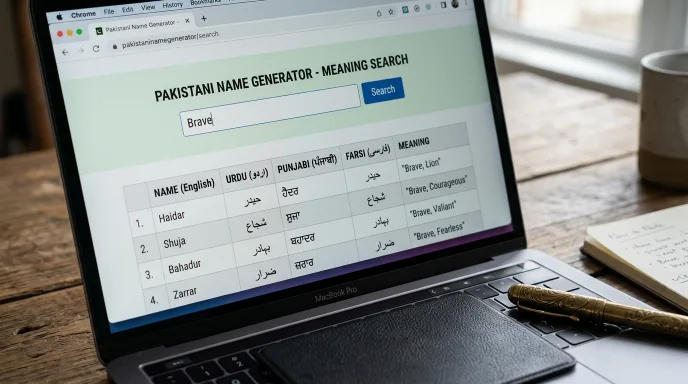
Urdu and Persian naming traditions tend to lean poetic, often built around light, nature, or virtue.
- Sarmad — meaning “eternal,” a name with a soft, literary quality
- Shayan — meaning “worthy” or “deserving”
- Farhan — meaning “happy” or “joyful”
- Danish — meaning “wisdom” or “knowledge”
- Behroze — meaning “fortunate day,” a name with strong Persian roots
- Kashan — meaning “one who discovers,” also tied to a historic Persian city name
These tend to appeal to families who like a name with a clear, positive meaning that also sounds distinctly Urdu rather than Arabic.
Regional Pakistani Boy Names
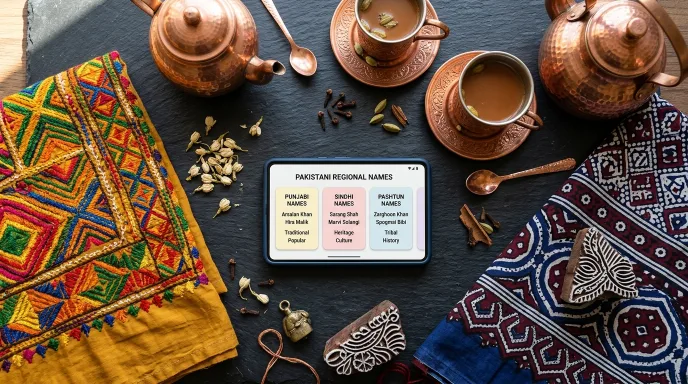
This is the category most generic “Pakistani names” lists skip entirely, but it’s where some of the most distinctive options come from.
Punjabi:
- Zorawar — meaning “powerful,” a name with strong regional presence
- Gurmani — a name carrying Punjabi heritage tied to land and lineage
Pashto:
- Zalmay — meaning “young man” or “youth”
- Wali — meaning “guardian” or “protector,” widely used across Pashtun communities
Sindhi:
- Sachal — meaning “truthful,” carrying deep cultural resonance in Sindh
- Wahid — meaning “unique” or “one,” used broadly with Sindhi pronunciation patterns
Balochi:
- Nawaz — meaning “one who is kind” or “gracious”
- Meer — meaning “leader” or “chief,” historically tied to Baloch tribal leadership
Filtering by these exact regions is one of the more useful features in the Pakistani Name Generator, where you can pull names from a specific tradition instead of a single blended list.
Modern Pakistani Boy Names
A newer wave of names has emerged over the past decade — shorter, easier to pronounce internationally, but still rooted in Islamic or Urdu meaning.
- Zayan — meaning “beautiful” or “graceful”
- Rohail — a modern name with a soft, contemporary sound
- Ayaan — meaning “gift of God”
- Arham — meaning “compassion” or “mercy”
These names are popular with families balancing tradition with a name that reads easily across different countries and languages.
How to Narrow Down Your Options
- Decide which category matters most to you first. Classical, regional, and modern names carry very different tones — picking a lane early makes the rest of the search faster.
- Say the full name out loud with the surname attached. A name can read beautifully on paper and still feel awkward once a specific family surname follows it.
- Check the meaning, not just the sound. Two names can sound almost identical while meaning completely different things — always confirm before finalizing.
- Consider how the name works internationally, if that matters to your family. Some regional or classical names travel easily across languages; others are harder for non-native speakers to pronounce.
Mistakes Worth Avoiding
- Picking a name purely because it’s currently trending. Trend-driven names can feel dated within a decade — a name with strong meaning tends to age better.
- Assuming all Pakistani names are interchangeable across regions. A Pashto name and a Sindhi name can carry very different weight depending on family background — regional accuracy matters more than most lists suggest.
- Skipping the meaning check for Quranic names. Not every classical-sounding name is actually Quranic — verify the source before assuming religious significance.
- Forgetting to test spelling variations. The same name can be spelled multiple ways (Yusuf/Yousuf, Bilal/Belal) — pick the version that matches how your family actually wants it written.
Common Questions, Answered
What is the best Pakistani boy name? There’s no single “best” name — it depends on whether you’re prioritizing a classical Quranic root, a regional connection, or a modern, easy-to-pronounce sound. Names like Ibrahim, Zayd, and Ayaan each serve different priorities well.
What are some popular Pakistani boy names from the Quran? Ibrahim, Yusuf, Musa, Hamza, and Bilal are among the most widely used Quranic boy names in Pakistan, each carrying strong historical and religious significance.
What are modern Pakistani boy names? Names like Zayan, Ayaan, Arham, and Rohail represent the current wave of modern Pakistani boy names — shorter, easier to pronounce, but still rooted in Urdu or Islamic meaning.
Are there different boy names for different Pakistani regions? Yes. Punjabi, Pashto, Sindhi, and Balochi naming traditions each have distinct boy names that don’t always overlap, even though all are considered “Pakistani.”
How can I find boy names for a specific Pakistani region? A region-specific filter is the most direct way — the Pakistani Name Generator lets you narrow results to Punjabi, Sindhi, Pashto, Balochi, or Kashmiri traditions specifically.
Can I see how a boy’s name looks with a father’s name or surname attached? Yes, most generator tools include a father’s-name or surname field so you can preview the complete name — first name plus surname — before deciding.
The Bottom Line
The right Pakistani boy name usually comes down to which of the four traditions — classical, Urdu/Persian, regional, or modern — actually matches what your family values most. Once you know that, narrowing down options gets much easier. For hundreds more options filtered by region, category, and starting letter, the Pakistani Name Generator covers all four traditions in one place, and the wider Culture & Religion Name Generators hub covers naming traditions from other countries as well.