
Quick Answer: A fantasy religion name generator helps writers, game masters, and worldbuilders create names for fictional faiths, cults, and pantheons that sound authentic instead of random. The trick isn’t just generating a name — it’s grounding that name in geography, language, and belief, the same way real religions got theirs.
If you’ve ever tried naming a fictional faith from scratch, you know the problem. You type something out, it sounds fine for about five seconds, and then it starts feeling like a random word mash-up instead of something a thousand people would actually worship. That’s the gap a good fantasy religion name generator is supposed to close — and this guide walks through how to use one properly, plus the naming logic behind it.
Why Fantasy Religion Names Are Harder Than They Look

Real religions didn’t get named overnight. Names came from founders, sacred texts, geographic regions, or the language spoken by the first believers. “Christianity” comes from Christ. “Islam” means submission in Arabic. “Shinto” combines Chinese characters meaning “way of the gods.” Every real name carries a story.
Fictional religions need that same logic, even if the story is invented. A name that’s just generated in isolation, with no connection to the world around it, tends to feel hollow — even if it sounds cool on its own.
This is exactly why a dnd religion name generator search brings up so many tools: tabletop groups need names fast, but they still want something a player would take seriously at the table.
How to Use a Fantasy Religion Name Generator the Right Way
Step 1: Decide the Core Belief First
Before generating anything, nail down one sentence: what does this faith actually believe? A sun-worshipping desert cult and a shadow-based death religion should never sound alike, even if you used the same generator for both.

Step 2: Pick a Linguistic Root
Real religion names usually borrow from a specific language family. If your fictional faith originated in a mountain kingdom with Norse-inspired culture, lean into Old Norse-sounding syllables. If it’s from a fantasy civilization name generator built around a desert empire, Arabic or Persian-inspired sounds will feel more consistent.
Step 3: Generate, Then Filter Hard
Most generators give you a batch of options. Don’t take the first result. Read through the list and cross out anything that:
- Sounds like it belongs to a different genre (sci-fi words in a medieval fantasy setting, for example)
- Is hard to pronounce out loud during a game session
- Accidentally resembles a real-world religion too closely
Step 4: Add a Title or Suffix
Real religions often carry structural words: Church, Order, Faith, Path, Circle, Covenant. Adding one of these to a generated root name instantly makes it feel more “official.” “Kaelvos” becomes “The Order of Kaelvos” — a small change that adds a lot of texture.
Building the World Around the Name
A name is just the entry point. Here’s what separates a forgettable fantasy religion from a memorable one.
Cosmology and Origin Story
Every faith needs an answer to “why does this exist?” Was the god real and witnessed by people, or is belief based purely on faith? This single decision shapes tone more than the name itself.
Clergy Structure
Decide who leads. A loose network of wandering prophets feels very different from a rigid, temple-based priesthood — and that difference should be reflected in title names (Elder, Speaker, Flamekeeper, and so on).
Rituals and Symbols
Even one memorable ritual — burning a specific herb at dawn, for instance — makes a fictional religion stick in a reader’s or player’s memory far more than the name alone.
Geography and Class Ties
Religions rarely spread evenly. Maybe this faith is only practiced by coastal fishing communities, or only by nobility. Tying belief to a location or social class instantly makes a fantasy religion name generator result feel like part of a living world instead of a random label.
Fantasy Civilization Names Follow the Same Logic
If you’re also naming the civilization that follows this religion, the same rules apply. A fantasy civilization name generator works best when the civilization’s name and its dominant religion share linguistic DNA — because in most real history, they did too. A civilization called “Vantheria” worshipping a faith called “Zorak’s Path” feels disconnected. “Vantheria” worshipping “The Vantheric Order” feels intentional.
| Element | Weak Example | Stronger Example |
|---|---|---|
| Religion Name | Random syllables, no theme | Rooted in the civilization’s language |
| Clergy Title | Generic (“Priest”) | Setting-specific (“Ashwarden,” “Flamekeeper”) |
| Origin Story | Not defined | One clear founding event or figure |
| Connection to Civilization | None | Shared linguistic or geographic root |
Common Mistakes to Avoid
- Naming the religion before deciding its beliefs. This almost always produces a name that doesn’t fit once the lore is fleshed out.
- Overcomplicating pronunciation. If players or readers can’t say it out loud comfortably, they’ll avoid using it — and the name loses its impact.
- Copying a real religion’s name too closely. It can come across as lazy or, worse, disrespectful. Use real religions as inspiration for structure and sound, not as a template to lightly reskin.
- Ignoring tone consistency. A funny religion name generator result might be great for a comedic campaign, but it’ll clash badly in a serious, dark-fantasy setting.
- Skipping a title or suffix. A bare root name rarely feels complete on its own — pairing it with “Order,” “Faith,” or “Covenant” does most of the heavy lifting.
Where to Start Generating

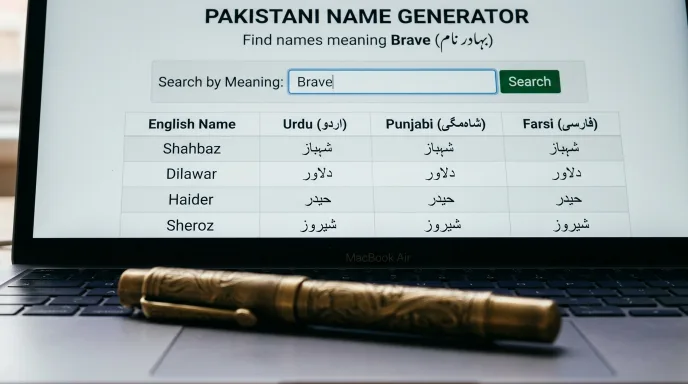
If you want real-world names as inspiration for tone and structure before inventing your own, our Culture & Religion Name Generators hub is a good starting point. It includes free tools covering Pakistani, Indian, Japanese, Korean, American, and Arabic naming traditions — useful for studying how real cultures build names before you invent a fictional one from scratch.
Frequently Asked Questions
What makes a fantasy religion name sound believable? A believable name is rooted in a consistent linguistic style, tied to the civilization or region it belongs to, and paired with a clear title or structural word like “Order” or “Faith.”
Can I use a dnd religion name generator for a homebrew campaign? Yes. Most tabletop groups use a generator to get a starting root name, then customize it with clergy titles and lore specific to their campaign world.
Should fantasy religion names sound like real religions? They can be inspired by real naming patterns, but copying a real religion’s name too closely often feels careless. Use the structure and sound as a guide, not a template.
How many names should a fantasy world have? There’s no fixed number — smaller worlds often work well with two or three major faiths, while larger settings can support many, especially if they’re tied to different regions or civilizations.
What’s the difference between a pantheon and a religion? A pantheon is a group of gods worshipped together, while a religion is the broader belief system, structure, and practice built around worshipping them.
Can a fantasy civilization name generator and religion name generator share the same root word? Yes, and it’s actually recommended. Sharing linguistic roots between a civilization’s name and its dominant faith makes the world feel more cohesive.
Conclusion
A strong fantasy or ancient civilization name generator result is only step one. The names that actually stick with readers and players are the ones backed by a real decision: what does this faith believe, who leads it, and where did it come from? Get that foundation right first, and even a simple generated name will feel like it belongs in the world you built.